Home › Road, Street, and Municipal Paving
Partner with a reliable crew for road paving in Baton Rouge, LA. We pave subdivision streets, municipal roads, and private access routes with proper grading, base construction, and durable asphalt mixes suited to traffic loads. Our team coordinates traffic control and phasing so projects move quickly while keeping drivers safe.
Precision Asphalt Baton Rouge provides professional road paving throughout Baton Rouge, LA, Louisiana and the surrounding area. Our licensed, insured crew delivers safe, clean, on-time work with a free estimate before anything begins. Call (225) 529-3584 or request your free quote.
Road Paving Expertise for Baton Rouge Communities
Road, street, and municipal paving in Baton Rouge is not a one-size-fits-all job. At Precision Asphalt Baton Rouge, we plan every project around local traffic patterns, soil conditions, and drainage challenges that are specific to south Louisiana. Whether we are paving a neighborhood street in Shenandoah, improving a connector road near Airline Highway, or resurfacing a parish-maintained route, the process starts with a detailed site evaluation and a clear plan for how the road will perform over the next 15 to 25 years.
Our team works frequently with city and parish departments, HOAs, commercial property owners, and private developers. We understand how to coordinate around schools, hospitals, industrial facilities, and residential areas to keep access open and disruptions minimal. From the first site visit, we are focused on long-term performance: how the asphalt will handle Baton Rouge heat, short but intense rainstorms, and heavy vehicles like garbage trucks and delivery fleets.
Precision Asphalt Baton Rouge uses modern equipment, trained crews, and specifications that meet or exceed Louisiana DOTD and local municipal standards. Whether you need a brand new roadway or rehabilitation of a failed street, we match the scope and materials to both budget and performance expectations, then stand behind the work with results you can see in the finished surface and the smooth ride.
How Road, Street, and Municipal Paving Is Actually Done
Road paving involves a series of controlled steps. First, we perform layout and survey checks so the road follows the correct alignment, width, and elevations on your plans. For reconstruction jobs, we mill or remove existing pavement to the required depth, then haul and dispose of debris at approved facilities.
Next is subgrade preparation. In Baton Rouge, the native soils can be soft or hold water, especially near the river or low-lying subdivisions. We proof-roll the subgrade with heavy equipment to locate soft spots, then undercut or stabilize those areas using crushed stone or, where appropriate, cement or lime treatment. This step prevents future settlement, rutting, and potholes.
Once the subgrade passes inspection, we build the base course. For most municipal streets we use a crushed limestone or recycled aggregate base, graded and compacted in thin lifts with vibratory rollers. We check density with field tests so the base reaches the specified compaction. Any shortcut at this step will show up later as cracks or waves in the asphalt.
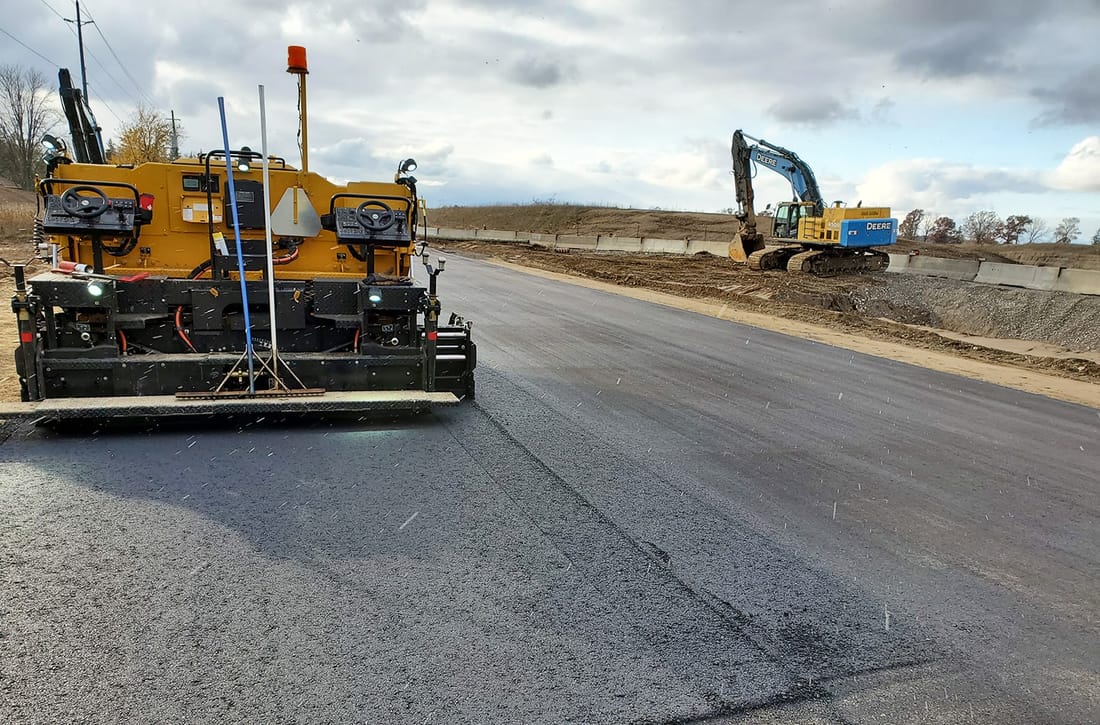
After the base is ready, we place asphalt in one or more lifts. A typical Baton Rouge residential street might receive a 2 inch wearing course over a thicker base layer, while busier collector roads or industrial streets may get multiple asphalt layers totaling 4 to 6 inches or more. A self-propelled paver lays the asphalt at controlled thickness, then steel drum and pneumatic rollers compact it to achieve a smooth, dense surface that sheds water and resists rutting.
Material Choices Tailored to Baton Rouge Conditions
Not all asphalt mixes are the same, and local conditions in Baton Rouge drive the right choice for each road. For low-speed neighborhood streets, we often specify a fine-graded surface mix that delivers a smooth ride and good appearance while still standing up to residential traffic and garbage trucks. For collector roads, industrial parks, and routes with frequent 18 wheelers, we use mixes with higher quality aggregates and modified binders that resist rutting and shoving in hot weather.
Precision Asphalt Baton Rouge also pays close attention to drainage design. In our climate, standing water is one of the fastest ways to destroy a road. We design cross-slope and crown into the pavement so water leaves the surface quickly, and we coordinate curb, gutter, and ditch elevations to avoid ponding. On older streets without modern drainage, we can often improve performance by adjusting elevations during resurfacing to move water away from problem spots.
For projects near chemical plants, warehouses, or heavy truck depots, we may recommend thicker asphalt sections or full-depth asphalt where the entire structure is asphalt from top to bottom. This approach can outperform thinner asphalt over a rigid base when traffic loads are high and frequent. For rural parish roads, we balance performance with cost by using robust base layers and slightly thinner surface courses, often over existing chip seal or older asphalt that is still structurally sound.
Cost Drivers for Road Paving in Baton Rouge
Road paving costs are driven by a combination of design, site conditions, and logistics. The largest factor is often asphalt thickness and total paved area. A 2 inch overlay on a stable existing road is far less expensive per square yard than full-depth reconstruction that includes subgrade stabilization and a thick new pavement structure.
Site conditions matter just as much. If the existing road shows widespread base failure, obvious pumping of water, or large areas of alligator cracking, repairing isolated patches will not be cost effective. In those cases, we will often propose targeted full-depth reclamation or deeper removal and rebuild in the worst segments. Baton Rouge clay soils that stay wet can also require underdrains or thicker base courses to achieve durable results.
Location and traffic control are another cost factor. Working on a busy commercial street near Siegen Lane or Florida Boulevard may require detailed traffic control plans, flaggers, off-peak scheduling, and coordination with multiple property entrances. Neighborhood streets often allow more flexible phasing, which can reduce labor and equipment standby time. We walk through these constraints upfront so you understand why one road may cost more per foot than another, even if they look similar on paper.
Material choices also influence cost. Higher performance asphalt mixes with polymer modified binders cost more per ton but can be the right investment for intersections, bus stops, or heavy truck routes where rutting is common. Precision Asphalt Baton Rouge will explain the tradeoffs so decision makers can select where to spend more and where standard mixes provide adequate performance.
Common Road Problems and How We Solve Them
Baton Rouge roads face a unique combination of heat, moisture, and traffic. The most common surface problem is alligator cracking, a network of interconnected cracks that indicate base failure below the asphalt. In these areas, simply sealing or overlaying the surface will not last. We mark and sawcut the failed zones, remove the full depth of pavement and weak base, rebuild the base with proper compaction, then patch with new asphalt tied in to surrounding pavement.
Another frequent issue is rutting in wheel paths, especially at intersections and bus or truck routes. This can be caused by inadequate asphalt thickness, weak base, or an asphalt mix that is too soft for the load and temperature. To correct it, we may mill the rutted area, place a stiffer or modified surface mix, and in some cases add structural thickness.
Drainage related damage is also common. Where water ponds along the edge of the road or at low spots, you will often see edge cracking, potholes, and accelerated raveling. Precision Asphalt Baton Rouge addresses the source of the water by adjusting grades, improving ditches, clearing or rebuilding catch basins, or adding underdrains. We then repair the pavement using techniques that match the level of underlying damage, from localized patching to partial-depth or full-depth repairs.
For older streets with many overlays and a rough ride, we typically recommend milling off one or more layers to reestablish proper curb reveal and drainage, then placing a new, consistent surface course. This avoids building the road higher than driveways and sidewalks, which is a common problem in older Baton Rouge neighborhoods.
What Local Property Owners and Agencies Should Decide Before Paving
Before you request bids for road paving, there are several decisions that will streamline the process and improve results. First, clarify the performance expectations and lifespan. A residential subdivision road with light traffic may only need a moderate thickness designed for 15 years, while an access road serving warehouses near the port might be designed for 20 plus years with heavy truck traffic. That expectation guides our recommendations for structure, mix, and thickness.
Next, consider traffic management and staging. Do you need to keep one lane open at all times, or can we close sections completely and work faster? Are there schools, churches, or peak business hours that affect when paving can occur? Precision Asphalt Baton Rouge builds production schedules around these constraints to minimize complaints and maintain access.
Budget structure also matters. Some municipal and HOA clients prefer to complete a full rebuild of the worst streets in one phase, while others choose a phased approach that addresses the most critical segments first. We can help prioritize based on structural condition, safety issues, and cost impact, then provide a clear map of recommended phases.
Finally, have a plan for ongoing maintenance. Even a well-built road in Baton Rouge benefits from periodic crack sealing, patching of isolated failures, and occasional surface treatments or overlays. We can provide a maintenance timeline and budget range so your roads stay in good shape instead of reaching a costly failure point all at once.
Why Work With Precision Asphalt Baton Rouge on Your Next Road Project
Road, street, and municipal paving requires more than a crew and a paver. It demands local knowledge, adherence to specifications, and consistent quality control. Precision Asphalt Baton Rouge brings years of focused experience with public and private road projects across the metro area, including residential subdivisions, commercial campuses, industrial access roads, and parish routes.
We coordinate closely with engineers and inspectors, follow project specifications, and document subgrade, base, and asphalt densities so you know the pavement was built to standard. On design-build or less formal projects, we help owners choose practical pavement sections that reflect realistic budgets and traffic loading instead of simply copying a generic detail from another job.
Our team understands that public perception of a road project is shaped by more than the finished surface. We place a strong emphasis on communication with residents and nearby businesses, clear signage, and clean, organized job sites. When the last roller leaves, the goal is a road that rides smoothly, drains properly, and reflects well on the agency or owner who commissioned the work.
If you have an upcoming road paving, street reconstruction, or municipal resurfacing project in Baton Rouge or the surrounding parishes, Precision Asphalt Baton Rouge can assist from evaluation and budgeting through construction and final striping.