Home › Industrial and Heavy-Duty Asphalt Paving
Handle heavy traffic and loading with specialized industrial asphalt paving in Baton Rouge, LA. We design thick section pavements for truck yards, loading docks, warehouses, and plants using robust bases and high performance asphalt mixes. Our focus is on load capacity, resistance to rutting, and long term performance under demanding use.
Precision Asphalt Baton Rouge provides professional industrial asphalt paving throughout Baton Rouge, LA, Louisiana and the surrounding area. Our licensed, insured crew delivers safe, clean, on-time work with a free estimate before anything begins. Call (225) 529-3584 or request your free quote.
Industrial Asphalt Paving Built for Baton Rouge Workloads
When you are moving 18-wheelers, forklifts, and heavy equipment every day, you cannot rely on the same paving approach used for a neighborhood driveway. Industrial asphalt paving in Baton Rouge has to handle high axle loads, constant turning, and hot, wet weather. Precision Asphalt Baton Rouge focuses on industrial and heavy-duty asphalt that is engineered for these conditions, not just paved to look black and smooth on day one.
We design surfaces specifically for industrial sites like distribution centers, plants along the river, waste transfer stations, truck yards, and high-traffic loading docks. That means thicker sections, stronger base layers, and mixes selected to resist rutting and shoving under slow, heavy traffic. Our team evaluates how your site is actually used: where trucks turn, where they queue, and where forklifts cross expansion joints, then we build the pavement structure around those stress points so you are not patching the same spots every six months.
Because we work in Baton Rouge every day, we plan industrial projects around local factors that affect performance, like expansive clay soils, standing water during heavy rains, and temperature swings that can push a marginal design over the edge. Our goal is a surface that holds up through Gulf Coast summers, not just long enough to get past the first inspection.
How Heavy-Duty Asphalt Is Designed for Your Facility
Industrial asphalt paving starts with design, not the first truck of hot mix. Precision Asphalt Baton Rouge begins every heavy-duty project with a site walk, soil evaluation, and traffic analysis. We look at soil type and stability, drainage patterns, and existing failures such as alligator cracking, pumping, or rutting that tell us where the current structure is too weak. For critical areas, we can coordinate basic soil borings or dynamic cone testing to verify bearing capacity.
Based on expected traffic (number of trucks per day, load distribution, and turning zones), we recommend a pavement section that typically includes a compacted subgrade, an aggregate base, a binder course, and a surface course. For heavy truck lanes or dumpster pads, it is common to use an 8 to 10 inch aggregate base, a 3 to 4 inch intermediate or binder layer with a coarser aggregate, and a 1.5 to 2 inch surface layer made from a rut-resistant asphalt mix.
Mix design is just as important as thickness. In high-stress areas we often specify a higher polymer-modified binder content and a stone matrix or dense graded mix that resists rutting from slow, loaded vehicles. For industrial yards with steel-tracked equipment, we may adjust aggregate size and binder content to balance durability with ease of repair. We also design joints and transitions carefully so that forklift wheels and pallet jacks do not hit a bump every few feet, which reduces both pavement damage and wear on your equipment.
Drainage design is built into the plan. In Baton Rouge, standing water quickly softens base layers and accelerates failure, so we set slopes, inlets, and edge details to move water off the pavement and away from building foundations. For sites with existing drainage issues, we may recommend underdrains or subgrade stabilization with lime or cement to keep the structure dry and stable over time.
Step-by-Step: Our Industrial Paving Process in Baton Rouge
Once the design is set, Precision Asphalt Baton Rouge follows a step-by-step construction process that is tailored to industrial and heavy-duty paving. First, we handle any necessary demo and milling, removing failed asphalt and soft base material instead of just covering it up. Where we find pumping, saturated, or clay-heavy subgrade, we proof-roll the area with loaded trucks or rollers to locate soft spots, then undercut and replace with aggregate or stabilize in place.
We then build the base. For most industrial projects in Baton Rouge, that means importing and compacting graded aggregate in multiple lifts, checking density with a nuclear gauge or proof-rolling to ensure uniform support. Poor compaction is a main cause of industrial pavement failure, so we do not rush this step, especially in loading docks and truck lanes that see repeated heavy loads.
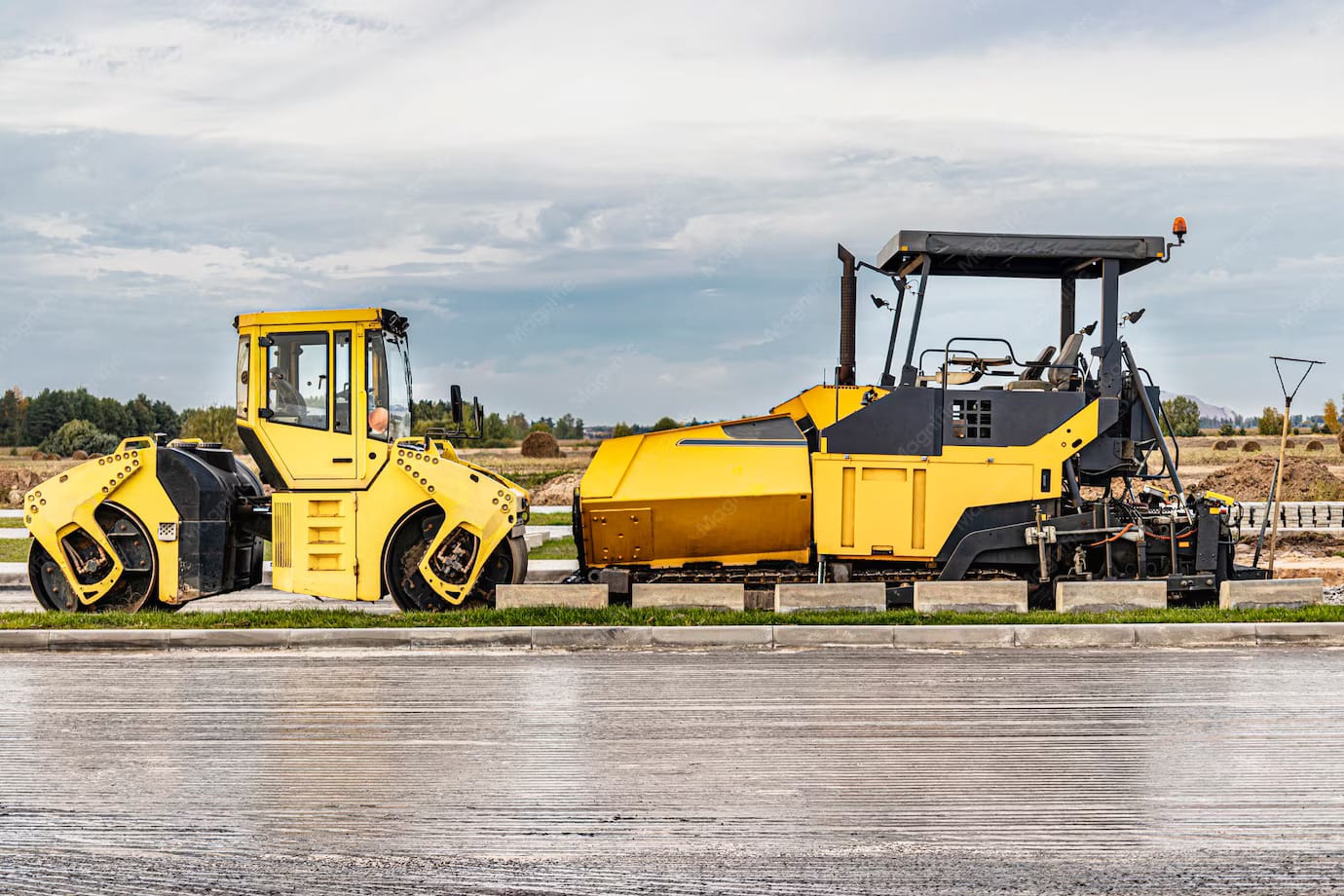
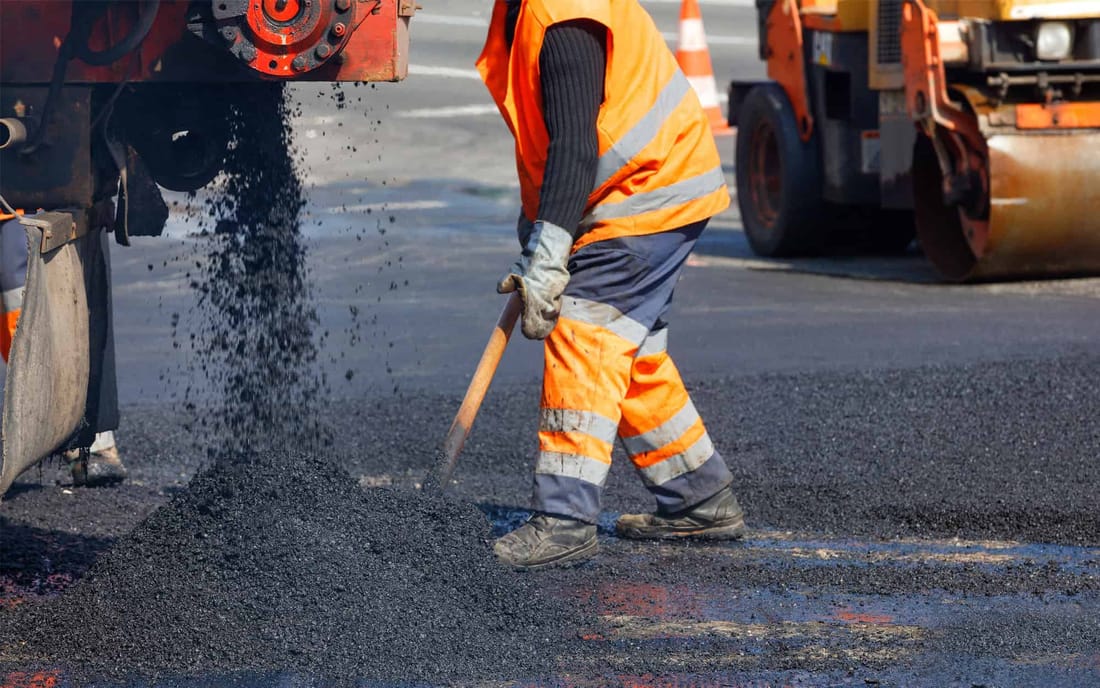
Next comes the asphalt placement, usually in separate binder and surface lifts. We use industrial-grade paving machines and rollers that can maintain consistent mat thickness and compaction across wide lanes. Industrial sites often require tight coordination with operations, so we phase the work to keep critical access open, schedule night or weekend paving when needed, and set up clear traffic control so your staff and visitors know how to move safely around the work zone.
After compaction, we immediately address details that affect long-term performance: handwork around drains and doors, smooth tie-ins to existing concrete, and sealant along joints where water might infiltrate. Once the pavement has cooled and passed our final inspection, we can add heavy-duty striping, truck stencils, loading zone markings, and bollard or wheel stop placements so the layout supports safe and efficient operations.
For facilities that must stay in service around the clock, we can stage the work in smaller sections, using temporary ramps and clear signage. We coordinate with your logistics or safety manager in advance so critical operations, such as time-sensitive deliveries or shift changes, are not disrupted.
Costs, Common Problems, and How We Prevent Them
Industrial asphalt paving has a wider cost range than light commercial work because the structural demands are higher and the consequences of failure are more serious. Pricing is driven mainly by total thickness of the asphalt and base, the need for subgrade stabilization, the complexity of demolition, and site access. Heavily loaded areas near the Port of Greater Baton Rouge or along the petrochemical corridor often require more robust sections than light industrial parks, which increases both material and labor costs.
If your existing pavement is failing, we look at the root cause before setting a budget. Rutting in wheel paths, shoving in front of dock doors, and early alligator cracking almost always indicate either inadequate thickness, poor base support, or trapped water. Simply overlaying these areas with a thin layer of asphalt will not hold up under your truck traffic. Precision Asphalt Baton Rouge instead evaluates where selective reconstruction, full-depth reclamation, or thicker overlays with localized base repair will give you the best life cycle value.
We also discuss life cycle costs, not just initial price. A slightly thicker structure or a better mix in heavy traffic zones may add a modest amount upfront but can add years of service life, reduce downtime for repairs, and lower your overall cost per year. In a climate like Baton Rouge, where heat and moisture accelerate aging, these design choices are often the difference between a pavement that lasts 7 years and one that performs for 15 or more with routine maintenance.
Common issues on industrial sites include fuel and oil spills, tire scuffing from tight turning forklifts, and damage from tracked equipment. We recommend specific maintenance practices like prompt cleanup of petroleum spills, early crack sealing, and, in some cases, using reinforced concrete pads in the most abusive zones (for example under dumpsters or directly in front of heavily used dock doors) while tying those pads smoothly into the surrounding asphalt.
Access constraints and underground utilities are another cost factor. Working around buried lines, shallow utilities, or limited truck access can affect production rates and required equipment. We identify these constraints during planning so there are fewer surprises once work begins and so your operations team understands how the schedule may be affected.
Local Requirements, Scheduling, and What to Ask Before Hiring
In Baton Rouge and the surrounding parishes, industrial and heavy-duty asphalt projects may require coordination with local permitting offices, especially if you are adding new impervious area or altering drainage. Precision Asphalt Baton Rouge can work with your engineer or architect to provide pavement thickness and section details that align with East Baton Rouge Parish stormwater and site development requirements. For projects inside city limits or industrial parks, we also pay attention to any published design standards for pavement and truck access lanes so you stay compliant.
Before you hire any paving contractor for industrial asphalt paving, there are a few key questions we encourage you to ask. First, ask for the proposed pavement section in writing, including base thickness, asphalt lift thicknesses, and mix types. If a contractor cannot explain why they chose a particular design based on your truck counts and usage, that is a red flag. Second, ask how they will verify compaction on both the base and asphalt layers. For heavy-duty work, density matters, and relying solely on a visual check is not enough.
You should also ask how the contractor plans to phase the work so your business can keep running. For example, can they complete half the truck court while the other half remains open, or pave key access roads after hours? Precision Asphalt Baton Rouge routinely builds phasing plans around shift schedules, truck delivery windows, and plant shutdowns so the project fits your operations.
Scheduling around weather is another local consideration. Our hot, humid climate means asphalt cools more slowly, but heavy Gulf storms can arrive with little notice. We watch local forecasts closely and avoid placing critical lifts when rain is imminent, which helps prevent stripping, loss of density, and surface defects. We also understand that many industrial facilities operate year-round, so we work with you to find windows, even in the hotter months, where the work can be done safely and effectively.
Finally, look for a contractor who talks about long-term maintenance and inspection, not just installation. We prefer to establish an ongoing relationship where we can come back periodically to seal cracks, repair early problem areas, and advise you on traffic pattern changes that might extend pavement life. For industrial asphalt paving in Baton Rouge, that combination of solid design, careful construction, and proactive upkeep is what keeps your trucks moving and your yard open.