Home › Asphalt Pathways, Sidewalks, and Trails
Connect your site with smooth, accessible routes using asphalt pathway paving in Baton Rouge, LA. We construct sidewalks, multi use trails, and pedestrian paths for parks, campuses, and commercial properties. Our designs prioritize ADA accessibility, drainage, and user comfort while providing a clean, low maintenance surface.
Precision Asphalt Baton Rouge provides professional asphalt pathway paving throughout Baton Rouge, LA, Louisiana and the surrounding area. Our licensed, insured crew delivers safe, clean, on-time work with a free estimate before anything begins. Call (225) 529-3584 or request your free quote.
Asphalt Pathways, Sidewalks, and Trails in Baton Rouge
Precision Asphalt Baton Rouge builds asphalt pathways, sidewalks, and multi‑use trails that are designed for local conditions, not for some generic climate on a manufacturer brochure. Our crews work all over East Baton Rouge Parish, from neighborhood walkways and school campuses to church properties and commercial complexes.
If you manage a property in Baton Rouge, you already know our heat, heavy rains, and occasional flooding are tough on walking surfaces. Concrete can crack and lift, and loose gravel washes away. Properly installed asphalt paths offer a smoother walking surface, better flexibility during temperature swings, and faster installation with less disruption to your site.
We focus on two things that most property owners care about most: a pathway that drains correctly and a surface that holds up to real traffic, whether that means pedestrians, golf carts, bikes, or light maintenance vehicles. Every project starts with what you need the path to do, not what is easiest for us to build.
Planning Your Asphalt Pathway or Trail
Before any equipment shows up, Precision Asphalt Baton Rouge walks the full route with you. We look at how your property is actually used: where people already walk, how water moves across the site, and where tree roots or utilities may cause future problems.
We map the pathway alignment and discuss width based on use. A simple residential side walkway may only need 3 to 4 feet, while a school or park trail often needs 6 to 10 feet to safely handle two‑way foot and bike traffic. If you expect service carts or small maintenance vehicles, we plan for that axle load from the start.
In Baton Rouge, drainage is not optional. We set a target cross slope on the pavement, usually between 1.5 and 2 percent, and design the path to shed water to swales, existing ditches, or new inlets. For low areas that hold water after a storm, we may recommend minor grading or shallow French drains so water never stands on your new walkway.
At this stage we also bring up access and phasing. For active campuses or apartment communities, we frequently break work into sections so tenants and students always have a safe way through. We coordinate around school calendars and business hours to reduce downtime for you.
How We Actually Build Asphalt Pathways and Sidewalks
Construction starts with clearing and grading the route. Precision Asphalt Baton Rouge removes vegetation, soft organics, and unsuitable soil until we reach firm native material. In some older Baton Rouge neighborhoods, especially near the river, we run into soft silt or previous fill that will not support a pavement. In those cases we either undercut and replace the soil or stabilize it with aggregate to prevent future rutting.
A compacted base is the backbone of any pathway. For light pedestrian use we typically install 4 inches of graded aggregate base, compacted with plate tampers and small rollers. For multi‑use trails or paths that will see golf carts or Gators, we usually increase base thickness to 6 inches or more, sometimes in two compacted lifts. We do not skip compaction tests on longer projects, so you know the base meets density targets.
Once the base is in, we place hot mix asphalt from our local Baton Rouge suppliers. For residential or low foot traffic walkways, a 1.5 inch to 2 inch surface course is usually enough. For commercial campuses and park trails, we often install a 2 inch surface on top of a 1.5 to 2 inch binder course, which gives better structure and longer life. Our crews use small pavers where possible for an even mat, then compact with steel drum rollers and plate compactors at edges and around fixtures.
Edge support is critical for narrow paths. Depending on your site, we may tie the asphalt into existing concrete, add a compacted shoulder of limestone or soil, or install concrete ribbon edges to keep the pavement from breaking off at the sides. Where paths meet parking lots, ramps, or crosswalks, we cut and key into the existing pavement instead of simply butting against it, which reduces bumps and future cracking at the joint.
Design Options, Materials, and Surface Details
Asphalt pathways are not limited to plain black strips. Precision Asphalt Baton Rouge can adjust mix design, layout, and finish details to match how and where the path will be used.
For residential sidewalks and HOA walking loops, we often recommend a fine‑graded surface mix. It has smaller aggregate, which gives a smoother, more comfortable walk for people using strollers, walkers, or wheelchairs. For park trails that see a lot of bike use, we keep joints and transitions very tight so tires roll smoothly across.
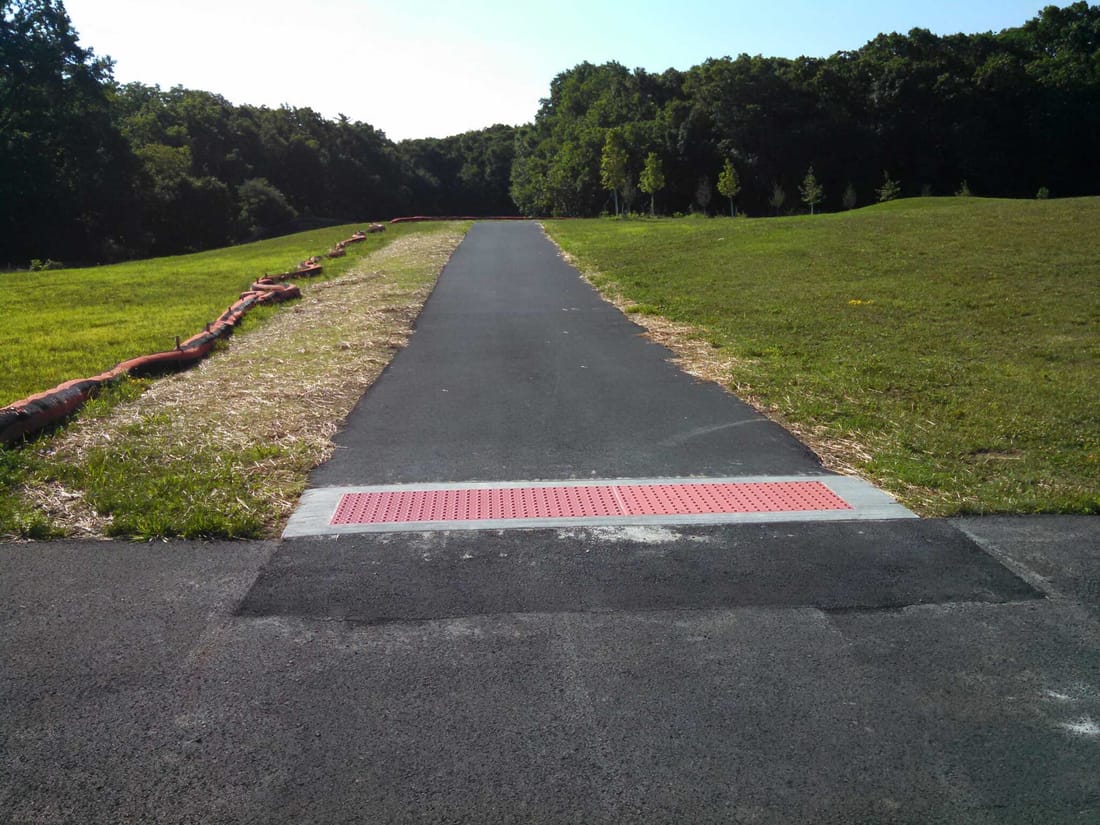
If visibility is important, such as around schools, senior living centers, or along parking lots, we can incorporate reflective striping, stop bars at crosswalks, and stenciled symbols for bikes or shared‑use lanes. We also provide concrete or asphalt transitions to meet ADA guidance at street crossings, with tactile warning panels when required by local standards.
Shaded routes under live oaks and large pines are common in Baton Rouge. In those locations we may recommend a slightly thicker pavement structure or reinforcing fabric at known root zones. The goal is to reduce surface heaving and trip hazards without removing healthy trees. In areas with frequent ponding or near retention ponds, we may add edge underdrains or a higher base grade so the pathway stays usable even after a heavy storm.
For properties concerned about appearance, we can plan sweeping curves instead of harsh angles, integrate the path with landscaping beds, and coordinate with your lighting contractor so conduit runs are placed before paving instead of being cut in later.
Costs, Permits, and Local Considerations in Baton Rouge
Total cost for asphalt pathway paving in Baton Rouge depends on more than just square footage. Precision Asphalt Baton Rouge prices each job based on access, base preparation needs, thickness, and site constraints.
Straight, open runs with good access for equipment are more economical than narrow, winding routes behind buildings where materials must be moved in smaller loads. If we can back a small paver right to the work area, your cost per foot usually drops. If we have to hand‑place and wheel asphalt around tight corners, the labor portion is higher.
Soil conditions and drainage drive cost as well. Paths built over firm, well‑draining ground may only need a standard aggregate base. In low, wet parts of town or in clay pockets that hold water, we sometimes recommend additional base thickness or stabilization to avoid future settlement. Spending a little more on that part of the work generally saves you from having to patch or rebuild sections a few years later.
Within the city limits of Baton Rouge, certain projects, especially in public‑facing areas or near drainage features, may require permits or at least coordination with the City-Parish Department of Development. For neighborhood sidewalks that connect to city streets, we follow the local standards for cross slopes and ramp design. HOAs sometimes have their own rules on path alignment, width, and appearance. We are used to presenting simple layout drawings and scope descriptions for board review and can help address questions about maintenance and life expectancy.
For schools, churches, and commercial facilities, we often schedule noisy operations like compaction and truck unloading outside of peak activity hours, which may slightly extend project duration but keeps disruption manageable.
Maintenance, Repairs, and What to Watch For
Well‑built asphalt pathways in Baton Rouge usually last many years, but our climate means you should plan some basic upkeep. Precision Asphalt Baton Rouge provides maintenance guidance with every project so you know what to look for.
Within the first year, keep heavy vehicles off paths that were not designed for them. Occasional use by small utility carts is fine when the path was built for that load. Dump trucks and full‑size delivery trucks are not. Concentrated loads along edges are a common cause of cracking and edge breakoff.
Every year or two, walk the route after a strong rain. Note any areas where water consistently stands on the surface more than a day. Early on, many of these spots can be corrected with small level‑up overlays or local base adjustments instead of full reconstruction. Catching those issues early is much more affordable.
As the surface ages, fine surface cracks are normal. When they start to form patterns or widen, we recommend crack sealing to keep water out of the base layer. For high visibility properties, a sealcoat at the right time can refresh appearance and helps slow weathering from UV and our hot summers. We avoid sealing too early, and we will tell you honestly if it is not needed yet.
If a tree root lifts the path, we evaluate whether root pruning, a local patch, or a short section replacement makes the most sense. In some Baton Rouge neighborhoods with protected trees, we coordinate with arborists so that root work does not violate local tree preservation rules.
When you contact Precision Asphalt Baton Rouge for repairs or new asphalt pathway paving, we will tell you what can be salvaged and what really needs replacement. Our goal is to keep your sidewalks and trails safe and usable with the least amount of disruption and expense over the life of the pavement.